

Accessing the Acropolis

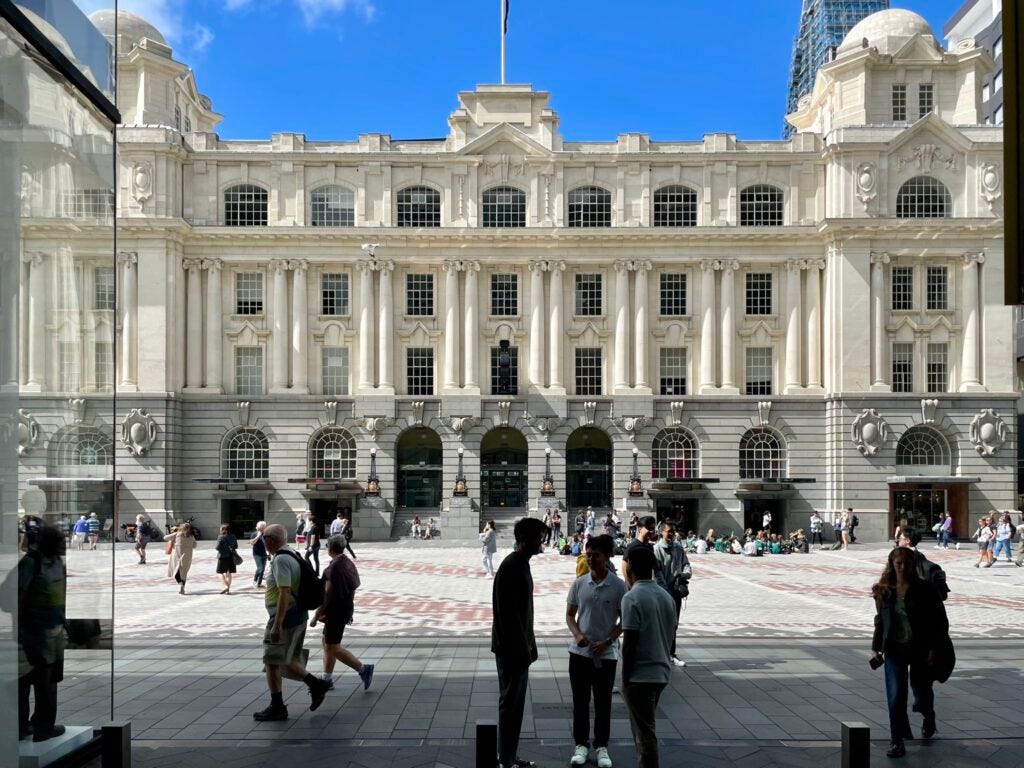
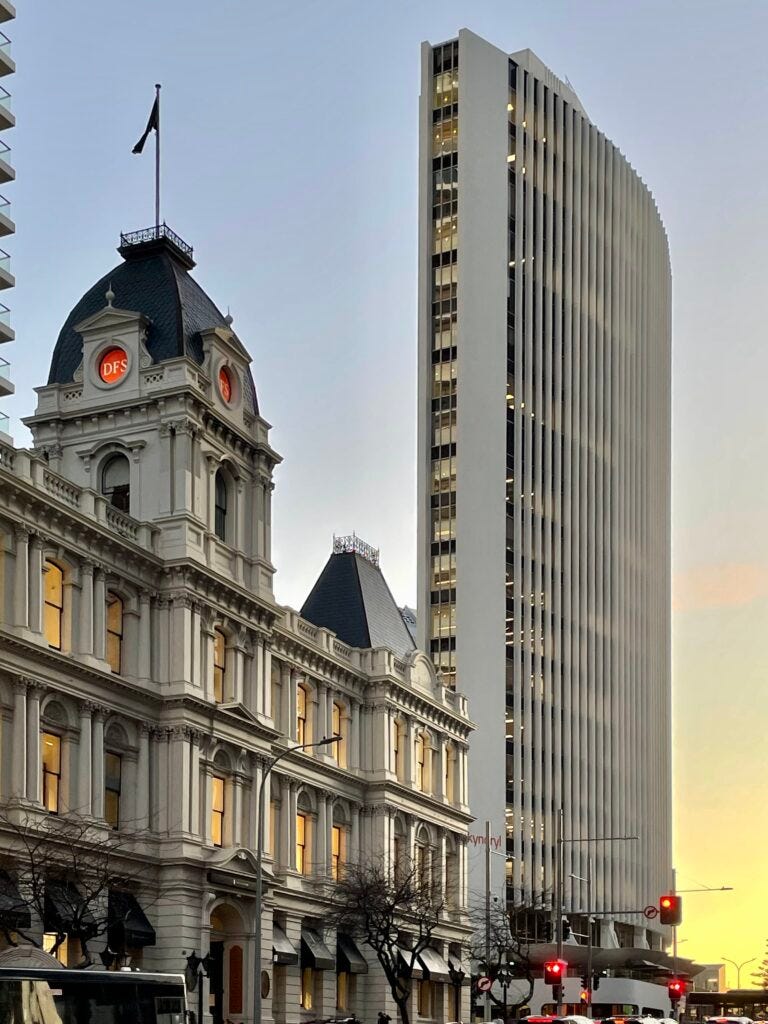
Tāmaki/Auckland only has a few public institutions of national significance: the Art Gallery, the Museum, and Auckland University, each housed in nationally significant buildings. Plus only a few truly high quality landmark buildings of similar value: Waitematā Station, Customs House, Ferry Building, West Plaza, and the Sky Tower, say. There are other good buildings, but for a city of 1.8m Auckland is light on historic and contemporary architectural power. So what, you might say? Well this is one of the ways good cities become great, a high quality built environment does help drive love and attachment from citizens and cement international reputation. Cities literally are, along with their geographic settings, their buildings, streets, and places. These set the stage for the real purpose of cities: attracting people in quantity.
The relative lack of great architectural moments is in part a function of Auckland not being the capital, despite being our primary city. This is best illustrated by comparison with Australia. Not with Australia the nation, but rather by comparing New Zealand with Australia’s states. Yes, in my view it is useful when thinking about Auckland to consider NZ as missing Australian state. In this context Auckland is an outlier as the only primary city among these ‘states’ that’s not also the capital.
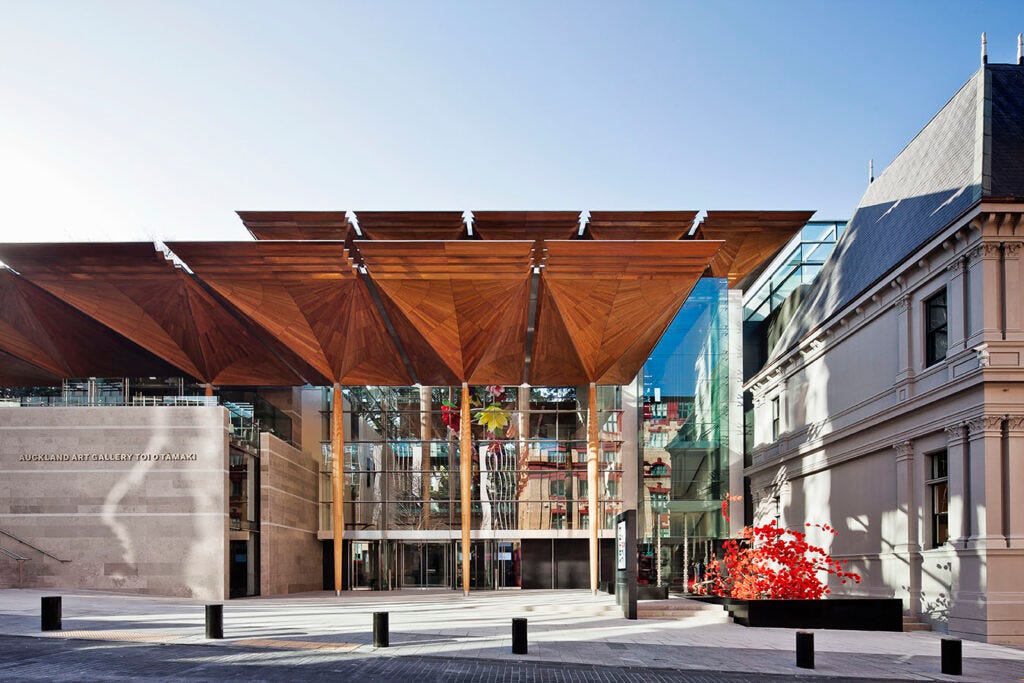
Great buildings, and great urban spaces take a huge collective commitment – they aren’t just built without real purpose, and nor are they usually sited randomly. No, how, when, and where they occur are functions of wealth, power, and politics. Which are concentrated in principle cities, especially capital ones. Australian primary/state capital cities all boast the full list of national level public institutions, all housed in significant public buildings. The State Libraries in both Sydney and Melbourne for example, the National Galleries of each state etc.
In this context it is really pretty impressive that Auckland built and continues to operate the three institutions listed above to a national standard, by itself, as institutions of this scale and quality normally take the full power and wealth of a state to sustain them. The vast bulk of our nation’s taxes flow to Wellington where the big organs of state create and maintain key institutions in landmark buildings to house them: archives, galleries, museums, government head offices etc.
It isn’t just a case of Australia being richer than NZ. See here for just how impressive the accumulation of stand-out public architecture in Wellington is, despite its small size, in a new updated edition of the city guides I do with John Walsh for Massey UP: Wellington Architecture Guide.
These great buildings and the institutions they host make huge contributions to the quality of their cities. They are like coral clusters on a reef, attracting and sustaining life in great scale and variety, spawning additional activity all around them. Even more valuable when clustered together in precincts, generally in the very heart of their cities.
So it is an additional blow for our city centre’s quality and vibrancy that one of these three key institutions, with its globally rated collection, and the very grand neo-classical building it occupies, is all alone, out of the city, on the tihi of Pukekawa. Commanding a great view and set in fine grounds. Exquisite apart.
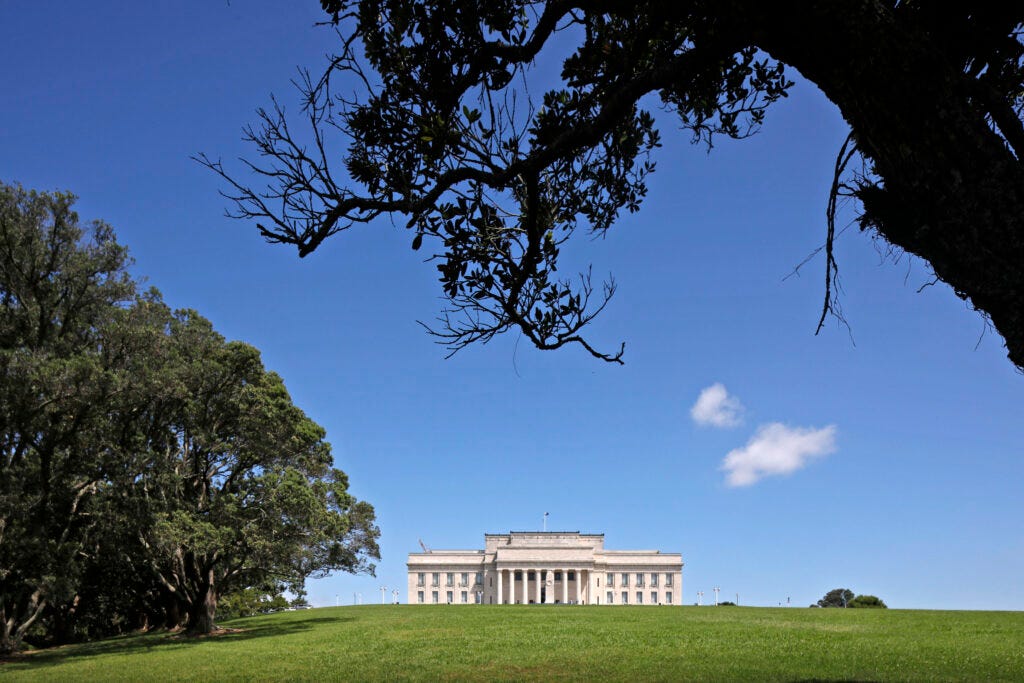
Not only distant from the urbs proper, but actually very awkward to get to from there or anywhere much else. Particularly by public transport. Ringed by train stations (3), positively circumnavigated by bus services (many), but these all keep a sort of hygienic distance, as if our Parthenon were too holy or otherwise to approach, at distances too far for most to want to walk (except for the plucky 781 – more on this below). Triangulated at a remove by the three near-but-far train stations. Too far especially for the old, very young, those with limited mobility, or on rainy days (perfect time for a Museum visit).
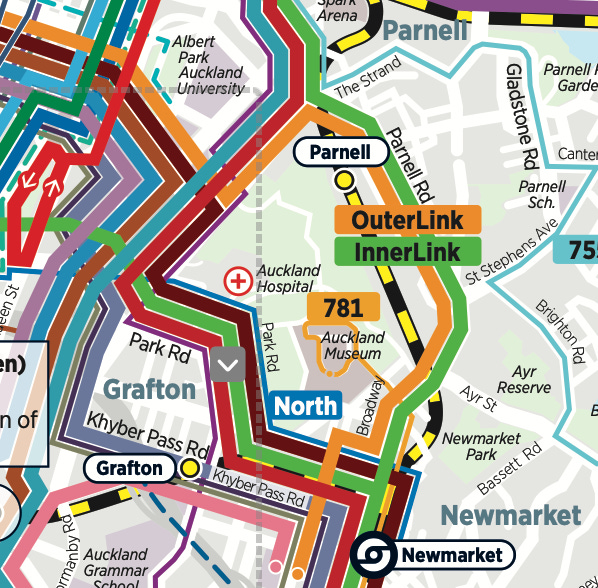
The three popular and highly legible colour-coded Link services get close.
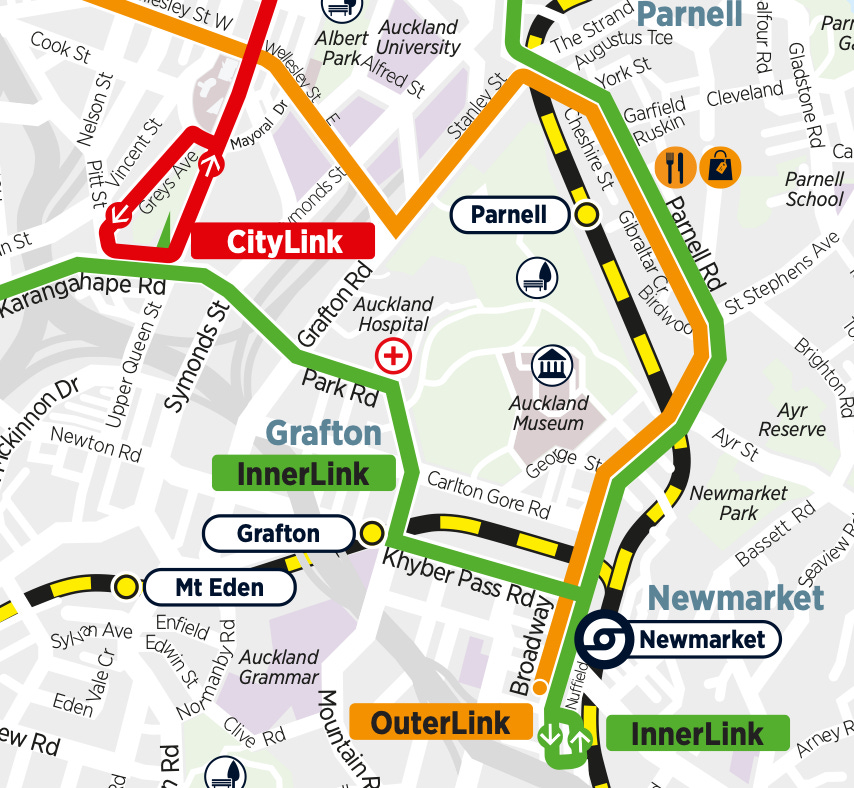
Link bus routes and rail stations all surround the Museum
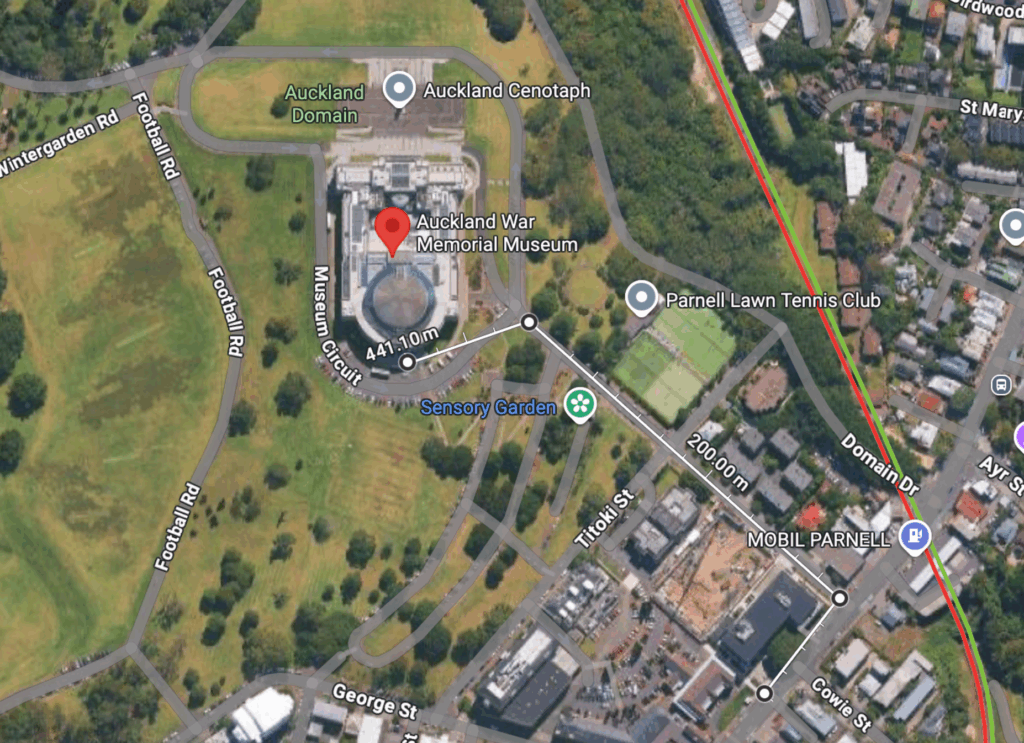
The Orange (Outer) and Green (Inner) get the closest. But even at best these stop some 400m away on Parnell Rd:
There is one scheduled bus service that actually reaches the building itself. A strange and infrequent rambler through Remuera from Mission Bay, the 781, running at 1/2 hour intervals between 7:20 in the morning to 7:20 at night. Which at least does stop at Newmarket and Ōrākei Stations so if lucky it could be used to extend the RTN to the Museum. Though really here the museum is just an add-on to what is a (probably quite useful) posh-schools collector service. Though I do know at least one senior Museum executive who is a regular user for their commute.
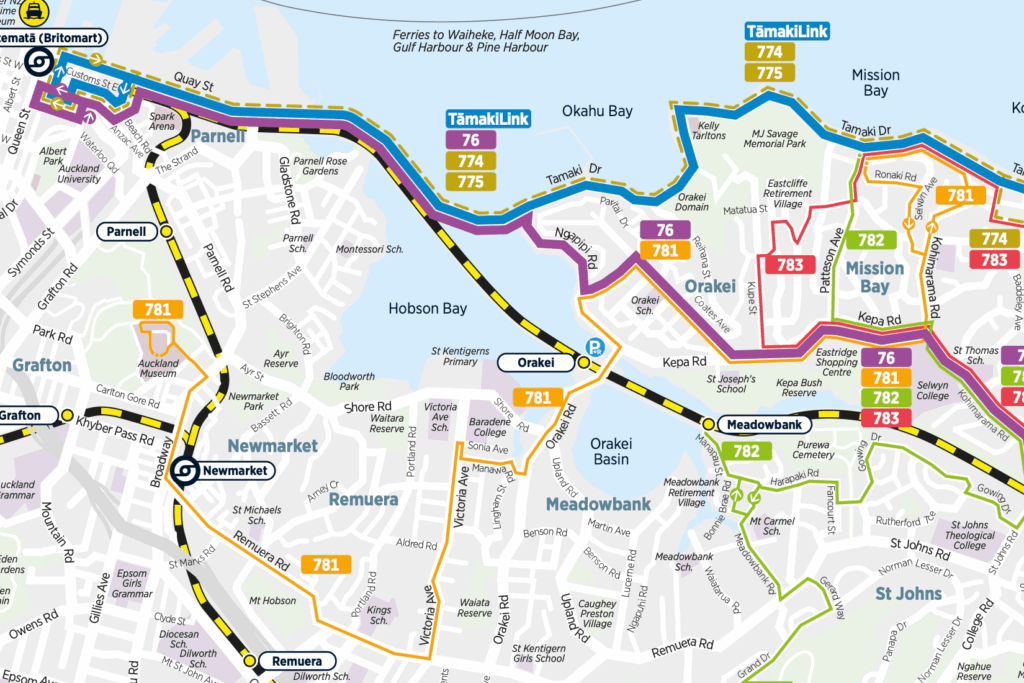
The 781
This is an issue that I’ve long felt should be addressed, and it appears it is on the minds of others too:
“The train station is quite far away and the bus as well. That’s one of the reasons why we funded this bus tour, to get our older people who might not have gone because of those accessibility issues,” he said.
He said the local board’s trial bus trips had worked.
“What we’ve heard from the museum is that it’s been a really good success. Our community love it. They’ve seen the impact that it’s had, and those are the discussions we can continue. How can we work with Auckland Transport? How can we fund more regular services?”
Apulu said the shared experience mattered: “Going as a group is important. The stories that were shared afterwards, after they had gone to the museum, those are valuable as well.”
Local boards funding tour buses to take their community direct to Museum is certainly a work-round. However as that is a solution for one community and only on special occasions, what we should be really seeking is a scheduled solution to the issue of museum access (Wintergarden and Domain). Taking the philosophy of our connected network, and the fact that the RTN is getting quite the qualitative uplift next year with the CRL opening, here’s what I’ve come up with:
The Culture Line
Extend the existing City Link to the Museum and back, via the hospital and the Wintergarden. This has the virtue of connecting all the RTN routes via all three CRL train stations, the Northern and North-Western Busway services, plus the downtown ferry Terminal, to the museum and hospital. Not to mention city centre hotels, and wandering tourists from cruise ships, and all with a frequent and highly legible red electric bus. A bus and route that’s easily explicable even to short-term visitors (“only get the red bus”), is frequent and highly visible on Queen St. Also passes by the Art Gallery and the Maritime Museum. For locals from all over the city it connects with every rapid transit line and every mode. This would become a great service to market these city attractions with too.
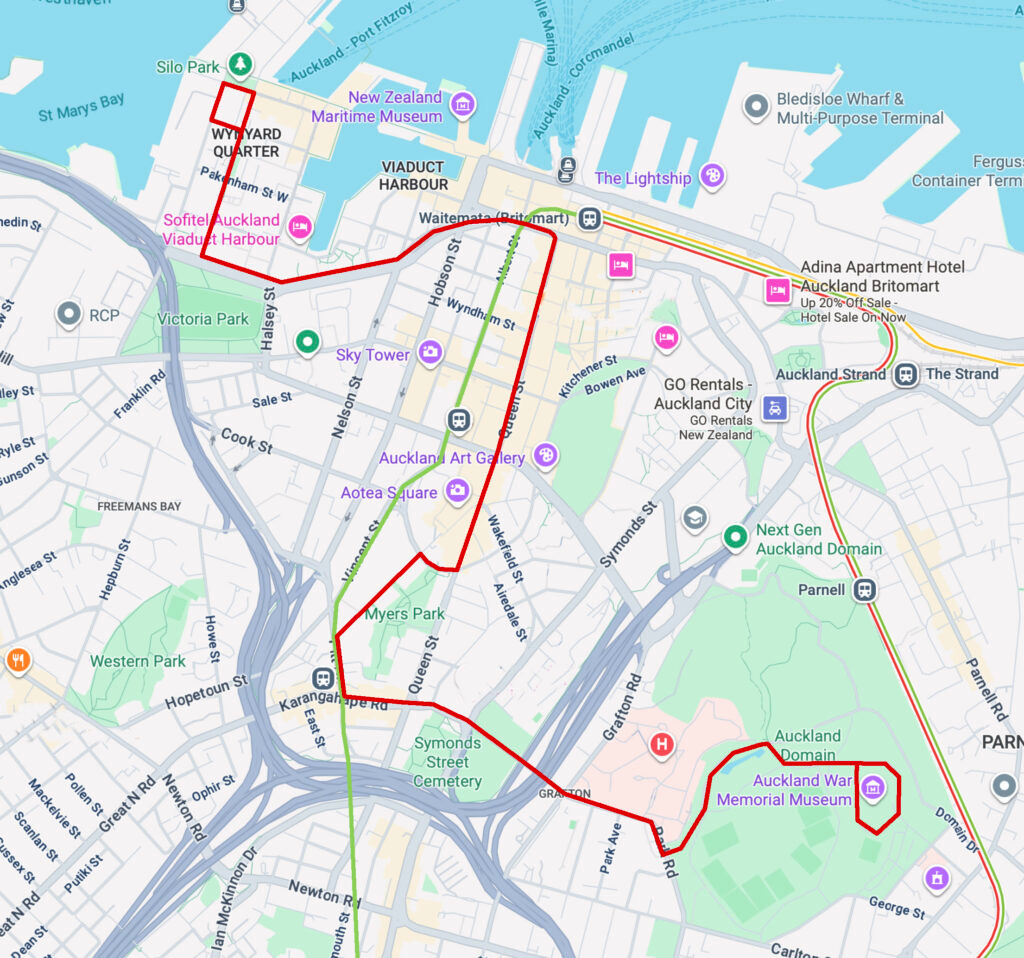
Below is its current route. As a local distributor this looks to me like making an already well used hop-on/hop-off “walking accelerator” and hill eater into a much more useful thing. Especially with the hospital/Med School as a happy bonus destination. A good surface level complement to the new city stations, connecting to key parts of the city central’s cultural and otherwise, that the CRL doesn’t visit directly.
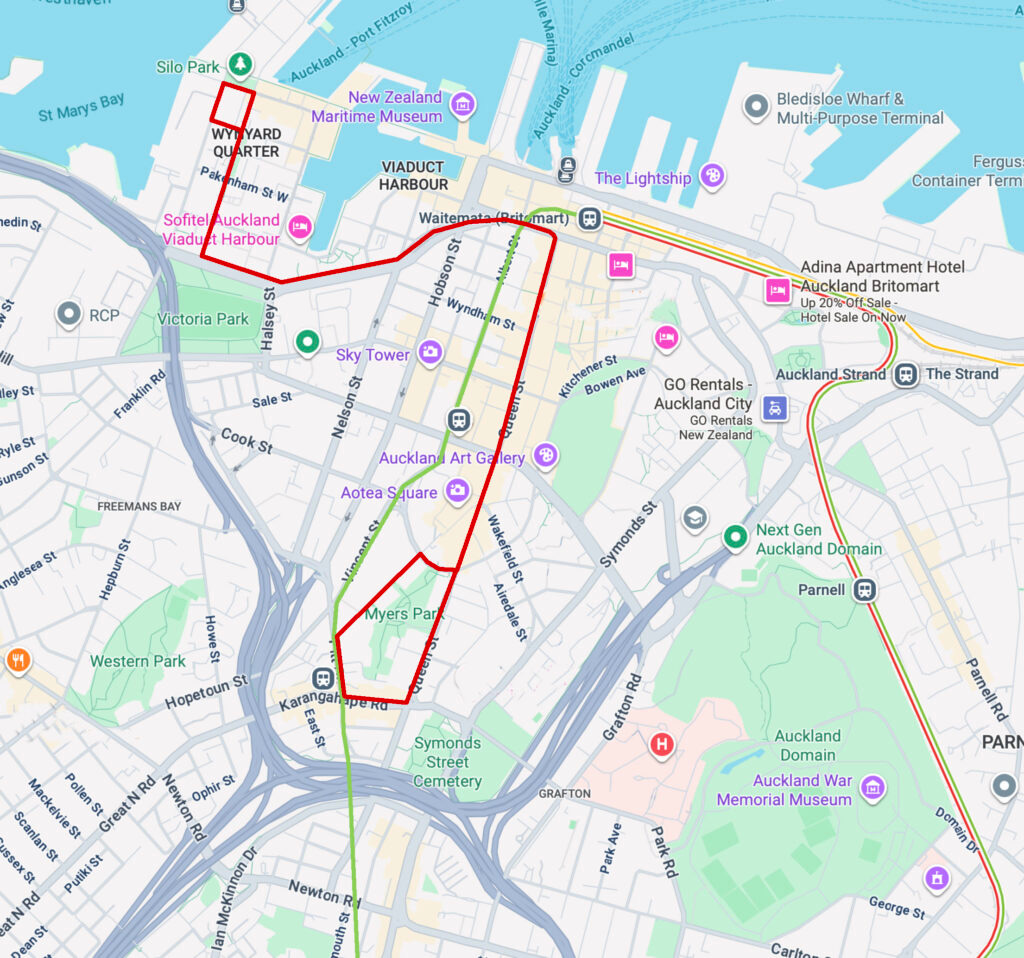
There are likely some changes that may need to be made to street pattern in the Domain to make this work well, but an upgrade there is long overdue anyway.
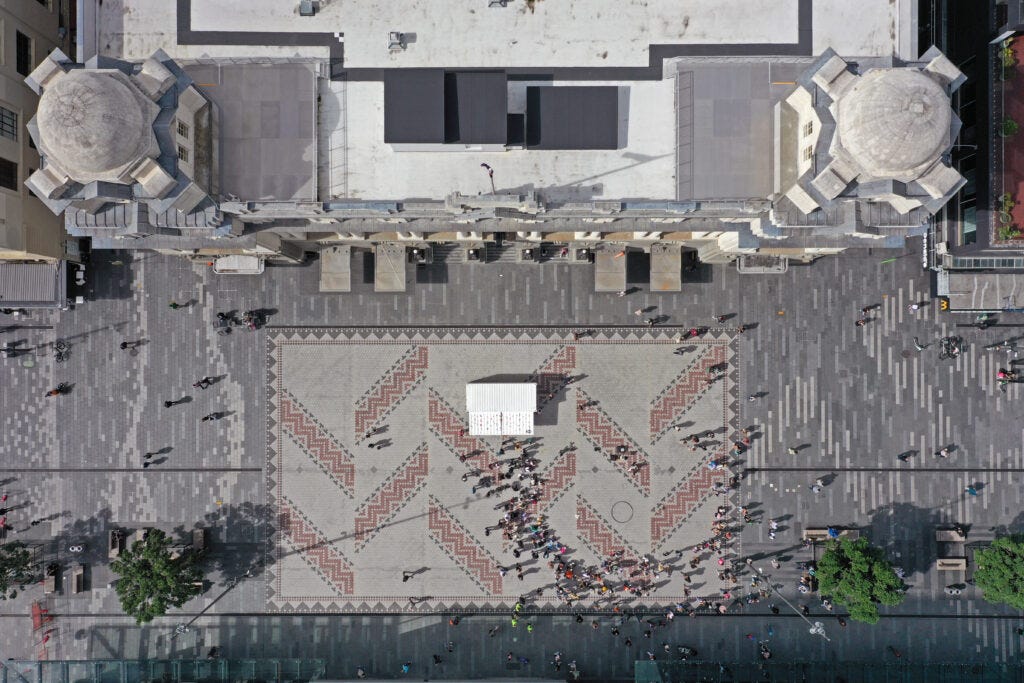
Auckland is not likely to become our capital, suddenly host to a whole bunch of grand central govt. funded institutions, so we have to be smart and ambitious with our urban quality. There are a number of small to large-ish moves we should work on, and in doing so always being mindful the quality of city we are making. Many are in our break-through city shaping blue-print, the City Centre Masterplan. A living plan that has given us so much already, like Te Komititanga, our first great truly urban collective space, so long over due. The CCMP should always be evolving, but it is important to note that everything imagined in it that we have managed to complete so far has added so much to the city, elevating it into a much better state.A truly visionary document by a visionary team at the Auckland Design Office.
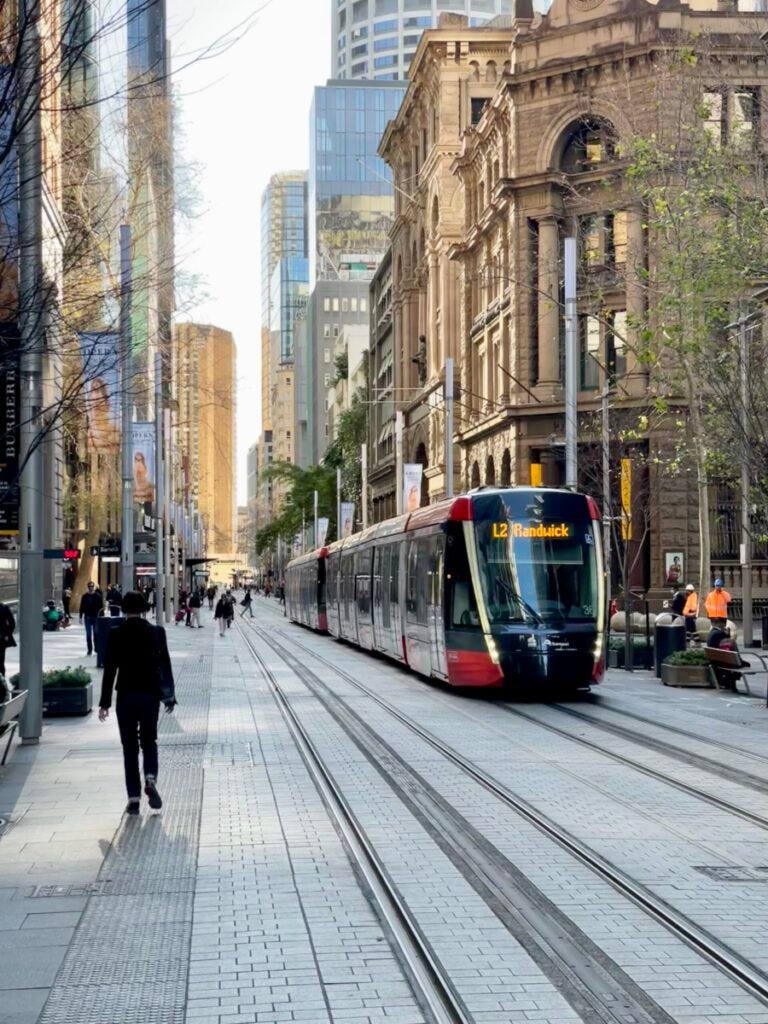
There are two other great moves we should be working on: Light Rail up Queen St through the Isthmus, and fixing the highway to the port with a multilane boulevard, to improve the efficiency of port access while humanising, greening, and reducing severance between the city and Parnell.
Plus there is a pressing need to complete the Green Link across the barrier of the motorway in Grafton Gully, so there is a high quality and direct walking and wheeling route across our city centre too.
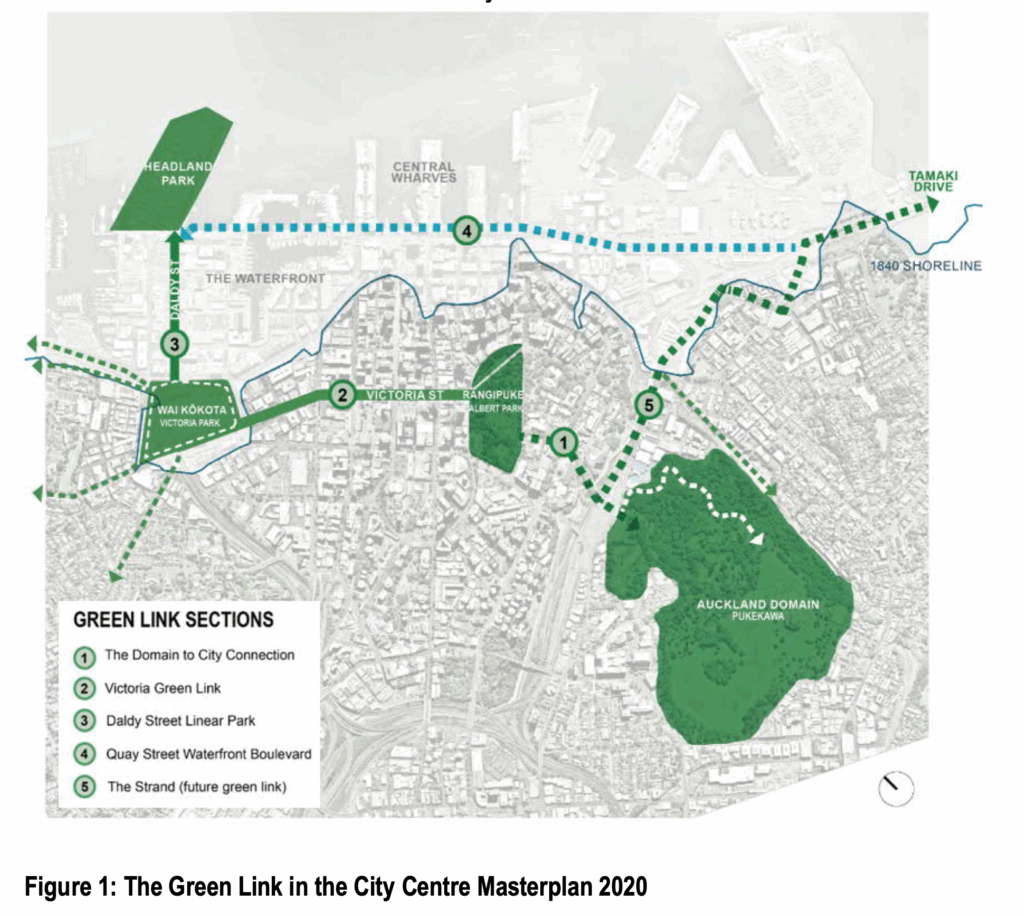
There are things we can do, and lead central government towards, to make Tāmaki/Auckland a greater and better city to call our own. Let’s get on with it.
Photographs Patrick Reynolds.
Thanks for your response Patrick. There are many ways in which government can manipulate the growth of regions and cities. When I arrived back to NZ in 2013 I was told there had been a concerted push to create a Tiger city for New Zealand – ie a city the size of Adelaide which allegedly we needed to compete in the Pacific. I agree that such attempts may or may not work as intended but I think the effort to create growth in the Aotearoa regional towns has been half hearted at best since the late 1980s. (I don't think that was the intention of the provincial growth fund?). This may all seem irrelevant to buses to the Museum but I don't think Greater Auckland is served well by treating the rest of NZ as if it only exists as, at best, competition to AKL or by treating the few resources there are (Domain) as if they would be improved by the loving ministrations of roading engineers.
Making Auckland into our ‘primary city’ was foolish and retrograde. Hordes (generations) of Aotearoa economists, design practitioners and so on managed to waste their years trooping around the UK and Europe. How did they fail to notice that the size of London distorts the whole UK economy and intensifies the decline of the north? Now we’re now faced with ludicrous Auckland transport and housing needs- the solutions to which are ugly and wasteful. The best outcome of rising house prices has been that provincial towns designated as “zombie towns” by our sophisticated analysts only 15 years ago suddenly demonstrated that they could grow and flourish. Not to mention Queenstown&Wanaka. So yes- do put on a bus service to the Domain & Museum but please don’t do a hideous redesign of the roads. Put any govt money into Dunedin or Palmerston North etc. And start looking around- there’s enough good buildings and heritage in Auckland if you take off your “world class city” blinders and try and imagine solutions that don’t involve yet more transport infrastructure.